
Infant Probiotic Drops — Safe From Day One
Give your baby a healthy start, right from birth, with BioGaia’s clinically proven probiotics — formulated to support their immune system, digestive comfort and overall well-being.
Why Early Gut Health Matters for Babies
In the first months of life, a baby’s gut microbiome is still growing and finding its balance.
The bacteria that take root during this window play a direct role in shaping digestion, immunity, and overall well-being for years to come.
Introducing specific probiotic supplements during this period helps support the developing microbiome for a healthy gut environment.
Which Probiotics are Best for Babies?
Not all probiotics are the same, and not all are formulated for infants. The strain matters, and so does the clinical evidence behind it.
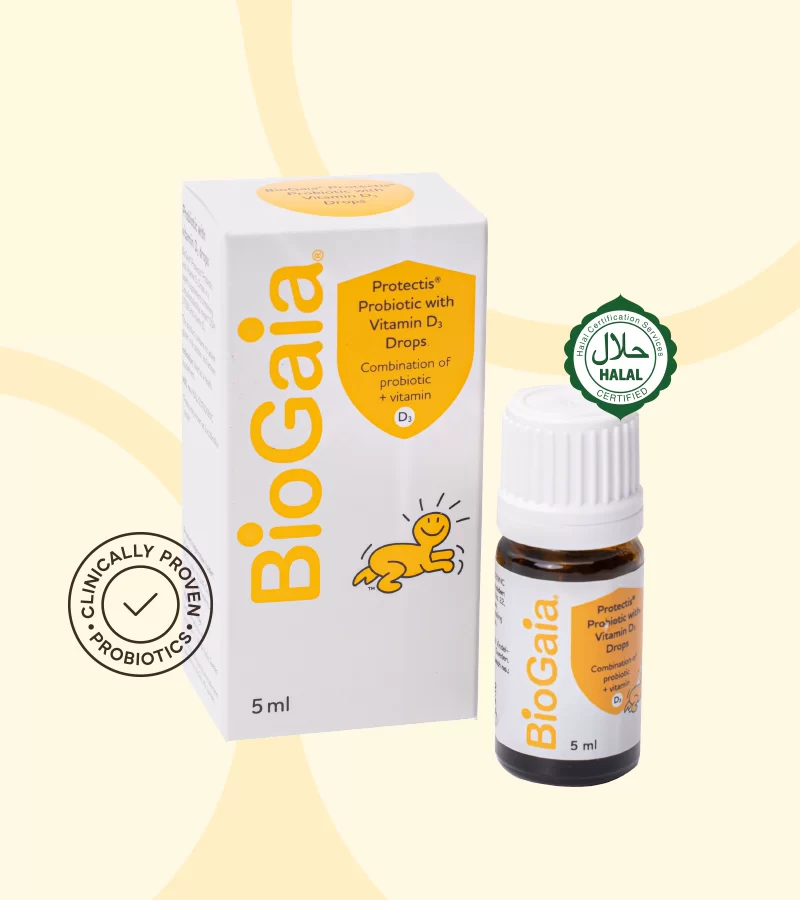
BioGaia’s infant drops contain a strain — L. reuteri DSM 17938 — originally found in human breast milk and naturally compatible with the infant gut. Backed by 290+ clinical trials, it is one of the most studied probiotic strains in paediatric research worldwide.




How Probiotics Help Manage Common Conditions in Babies
From colic to constipation, BioGaia’s probiotics have been proven effective across the conditions parents encounter most.
Infantile Colic
IInfantile colic is a common condition, though poorly understood and often frustrating for parents and caregivers.
Colic is defined by the Rome IV diagnostic criteria for functional gastrointestinal disorders (FGIDs) as
Your child is under 5 months of age
Has recurrent and prolonged periods of crying and fussing without an obvious cause
Cannot be soothed
No fever, other illness
As many as 26% of infants are diagnosed with colic, making it one of the most frequent reasons for visits to paediatricians.
Colic May Affect Gastrointestinal Health Later in Life
In the last decade, the role of the gastrointestinal microbiota has come into focus. Lower counts of intestinal lactobacilli as well as increased concentrations of coliform bacteria have been observed in colicky infants compared to non- colicky ones.
It has also been shown that colic in infancy is linked to an increased susceptibility to recurrent abdominal pain, allergic diseases, and psychological disorders later in childhood.
L. reuteri is the Only Probiotic with Scientific Evidence in Infantile Colic
The possibilities to treat colic have been limited. Simethicone has been widely used in many countries but clinical research has shown that it is no more effective than placebo.
However, three independant studies with L. reuteri have shown a reduction in crying time in colicky infants. This makes L. reuteri the only probiotic with a proven efficacy in infantile colic.

Benefits of L. reuteri on Infantile Colic Based on Previous Findings
L. reuteri Reduced Excessive Crying and Improved Quality of Life
The significant effect of L. reuteri was seen as early as one week after initiated supplementation and persisted to the end of the study.
Daily crying time was reduced by more than one hour at day 28 compared to placebo. Family quality of life was significantly improved.
(Szajewska H et al. Lactobacillus reuteri DSM 17938 for the Management of Infantile Colic in Breastfeed Infants: A. Randomised, Double-Blind, Placebo-Controlled Trial. J. Pediatr. 2013; 162:257-262.)
L. reuteri Reduced Crying Time iIn Colicky Infants by 74% After One Week
The effect was seen as early as one week after supplementation. Daily crying time was reduced by 1 1⁄2 hours on average compared to placebo.
(Savino F et al.Lactobacillus reuteri DSM 17938 in Infantile Colic: A Randomized, Double-Blind, Placebo-Controlled Trial. Pediatrics (2010) 126 (3): e526–e533.)
L. reuteri Reduced Crying Time iIn 95% Of Infants with Colic
The effect was seen as early as one week after supplementation. L. reuteri were superior to the currently most prescribed treatment, simethicone, in reducing daily crying time.
L. reuteri reduced crying time by more than twice as much as simethicone.
(Savino F et al. Lactobacillus reuteri ATCC 55730 versus Simethicone in the treatment of infantile colic: a prospective randomised study. Pediatrics 2007.)
Regurgitation
Regurgitation is defined as the passage of refluxed gastric content into the pharynx or mouth, sometimes with expulsion out of the mouth.
Improved feeding tolerance and gut function in healthy preterm infants. A growing body of research in recent years shows a connection between the intestinal microbiota and diet for health and disease.
Today, there are strong indications that diet can influence the number of microbial species in the gastrointestinal tract. In addition, supplementation of probiotics is an attractive alternative, and the clinical evidence for this is growing.

Benefits of L. reuteri on Regurgitation Based on Previous Findings
L. reuteri Significantly Increase Gastric Emptying
L. reuteri has in both term and preterm infants been shown to significantly increase gastric emptying and thereby decrease regurgitation. Twice as fast gastric emptying rate in L. reuteri group compared to placebo. L. reuteri reduced the number of regurgitations to half as much as placebo. (Indrio F et al. The effects of probiotics on feeding tolerance, bowel habits and gastrointestinal mortality in preterm newborns. J Pediatr 2008;152:801-806)
80% Reduction In Daily Regurgitations With L. reuteri
L. reuteri significantly increased gastric emptying rate compared to placebo. As a result, the number of regurgitation was significantly reduced among supplemented infants (Indrio F et al. Lactobacillus reuteri accelerates gastric emptying and improves regurgitation in infants)
Constipation
Constipation is a common and distressing problem all over the world. Approximately 40% of children with functional constipation develop symptoms during their first year.
The problems often start when changing from breast milk to formula or with the introduction of solid food. Other frequent starting periods are during toilet training between two and four years of age, or when the child starts school.

Benefits of L. reuteri on Constipation Based on Previous Findings
100% Normalisation Of Stool Frequency In Infants With Chronic Constipation
Significant improvement of bowel movements with L. reuteri. 91% of infants normalised their stool frequency within 2 weeks, and 100% within 4 weeks
(Coccorullo P et al. Lactobacillus reuteri (DSM 17938) in infants with functional chronic constipation: double-blind, randomised, placebo-controlled study. J Pediatrics 2010;157:598-602.)
Functional Abdominal Pain
Long lasting intermittent or constant abdominal pain without evidence of an organic cause is defined as functional abdominal pain and affects 10–20 % of all school-aged children. It is one of the most commonly diagnosed medical problems in paediatrics.
(Weizman Z, Asli G, Alsheikh A. Effect of a probiotic infant formula on infections in child care centres: comparison of two probiotic agents. Pediatrics. 2005;115:5-9.)

Benefits of L. reuteri on Functional Abdominal Pain Based on Previous Findings
Reduced Pain Intensity in Children with Functional Abdominal Pain
Reduction of pain intensity with L. reuteri persisted during the follow-up period of four weeks. The frequency of pain was significantly reduced in L. reuteri-supplemented children.
(Romano C et al. J Paediatr Child Health. 2014 Oct;50(10):E68-71. doi: 10.1111/j.1440-1754.2010.01797.x. Epub 2010 Jul 8)
Acute Gastroenteritis

Acute Gastroenteritis (AGE) manifests in an inflammation of the gastrointestinal tract, affecting the stomach lining as well as that of the small intestine.
General symptoms are loose or liquid stools and/or an increase in the frequency of evacuations (≥ 3 in 24 hours), with or without fever or vomiting. Typically, the diarrhea lasts less than seven days and not longer than 14 days.
AGE A Worldwide Problem.
AGE is a major cause of morbidity and mortality in children around the world. The vast majority of deaths occur in developing countries, but even in the developed world AGE is associated with a substantial number of hospitalisations and high costs.
Probiotics in the Treatment of AGE
Several large systematic reviews have found probiotics to be effective in reducing the duration of diarrhea in children with AGE. Studies have also shown that the earlier the onset of probiotic treatment, the faster the recovery.

Benefits of L. reuteri on Acute Gastroenteritis Based on Previous Findings
L. reuteri Reduced Watery Diarrhea In 45% Of Children On The Second Day Of Treatment
L. reuteri significantly reduced the frequency and duration of diarrhea.
(Francavilla R et al. Randomised clinical trial: Lactobacillus reuteri DSM 17938 vs placebo in children with acute diarrhea – a double blind study. Aliment Pharmcol Ther. 2012;36:363-369. Shornikova AV et al. Lactobacillus reuteri as a therapeutic agent in acute diarrhea in young children. J Pediatr astroenterol Nutr. 1997;24:399-404.)
L. reuteri Reduced Vomiting In Children By 84% On The Second Day Of Treatment
L. reuteri significantly reduced both vomiting and diarrhea. Effects seen already on the second day of treatment.
(Eom et al. The Therapeutic Effects of Lactobacillus reuteri in Acute Diarrhea in Infants and Toddlers. Korean J Pediatr 2005;48: 986-989.)
Infectious Protection
Infectious diseases are the most significant illnesses in children under the age of five. For infants and children attending day care centres the risk of respiratory and gastrointestinal infections is higher than for children who are cared for at home.

Benefits of L. reuteri on Infectious Protection Based on Previous Findings
L. reuteri Reduced Diarrhea Episodes, Fever, Antibiotic Use and Absence From Day Care.
Supplementation of L. reuteri led to significantly fewer days with fever, less absence from day care and fewer prescriptions of antibiotics compared to both BB-12 and the placebo group.
Days and episodes of diarrhea were significantly reduced with L. reuteri compared to placebo.
(Weizman Z , Asli G, Alsheikh A. Effect of a probiotic infant formula on infections in child care centres: comparison of two probiotic agents. Pediatrics. 2005;115:5-9.)
Antibiotic-Associated Side Effects
Antibiotic-associated side effects are common and usually affect the gastrointestinal system and may include diarrhea, nausea, vomiting, bloating and abdominal pain.
These manifestations appear when antibiotics disturb the balance of the “good” and “bad” bacteria, causing pathogenic bacteria to multiply beyond their normal numbers.
Probiotics are regarded as effective for controlling the overgrowth of potentially pathogenic microorganisms and may help to prevent or lower the incidence of antibiotic-associated side effects.
L. reuteri has been studied in children as an adjunct to antibiotic treatment, and has been shown to successfully reduce antibiotic-associated side effects.

Benefits of L. reuteri on Antibiotic-Associated Side Effects Based on Previous Findings
L. reuteri Reduced The Frequency And Intensity Of Antibiotic-Associated Side Effects In Children
L. reuteri significantly reduced antibiotic-associated side effects compared to placebo. The effects on GI symptoms were evident both during the course of antibiotics and the follow-up period.
(Lionetti E et al. Lactobacillus reuteri therapy to reduce side effects during anti-Helicobacter pylori treatment in children: a randomized placebo controlled trial. Aliment Pharmacol Ther. 2006;24:1461-1468.)
FAQs
Are probiotics safe for newborns?
Yes, especially with a specific strain like L. reuteri used in BioGaia probiotics. It is naturally found in human breast milk and has been clinically tested in thousands of infants, including newborns and pre-term babies, showing no safety concerns or adverse side effects.
How do I know which probiotics are right for my baby?
Selection depends on your baby’s primary nutrition source. BioGaia Probiotic Drops are the standard choice for all infants to support colic relief, digestive comfort, and immune health.
If your baby is exclusively breastfed, BioGaia Probiotic Drops with Vitamin D3 adds 400 IU of Vitamin D3 per dose — supporting bone development, as breast milk alone does not provide sufficient Vitamin D.
How long until BioGaia drops work for colic?
Clinical studies show a significant reduction in daily crying time within 7 days of consistent use, with 95% of infants responding positively by the end of the first month.
Can I mix BioGaia drops with breast milk or formula?
No. They are best given by dispensing five drops onto a clean spoon or onto the nipple before feeding. Do not dispense directly from the bottle into your baby’s mouth, as saliva may contaminate the remaining product.
How do I store BioGaia drops in Malaysia’s heat?
Before opening, store in a cool, dry place below 25°C, away from direct sunlight. Once opened, refrigeration is recommended to preserve potency through to the last dose.
What is the white strip inside the BioGaia tube?
That’s our LongevityGuard™ innovation — a desiccant strip designed to absorb moisture and help protect the live probiotic bacteria.
An unopened bottle helps keep the bacteria stable for up to two years, and for up to 3 months after opening when stored as recommended.
How long does one bottle of baby probiotics last?
At five drops once daily, one bottle lasts approximately one month. For uninterrupted daily use, the BioGaia Probiotic Drops Twin Pack and BioGaia Probiotic Drops with Vitamin D3 Twin Pack offer two months’ supply at a better value.
For even greater savings, the Buy 3 Free 1 BioGaia Probiotic Drops is the best option for long-term daily use.
Are there any sugars or dairy in BioGaia drops?
No. The formula is free from sugar, lactose, milk protein, and gluten — making it suitable for infants with milk allergies or lactose intolerance.
At what age can my child switch from drops to powder or tablets?
Besides drops, you can also use BioGaia Protectis Powder 30 sachets for added convenience. It is designed to be easily mixed with milk or food from birth (0+).
You can switch to BioGaia Probiotic Chewable Tablets 30’s once your baby reaches 3 years old and is able to safely chew and swallow.
Are BioGaia products halal-certified in Malaysia?
BioGaia Probiotic Drops with Vitamin D and BioGaia Protectis Powder are halal-certified in Malaysia. Halal certification for our other products is currently in progress. Contact us for more details.
Give Your Baby the Best Probiotics
Every baby deserves the right start, and the right strains and formulations give them a strong foundation for lifelong health.