
Probiotics for Pregnancy — Supporting You and Your Baby
Nurturing your health today creates the foundation for your baby’s tomorrow.
Why Probiotics Matter During Pregnancy
Being pregnant is a fantastic experience, but it is also a major adjustment for your entire body. You are no longer alone in your decisions and actions, but sharing everything with a tiny baby. In many ways, your days as a mother have already begun.
Probiotics can, by promoting a healthy microflora, prevent or relieve common pregnancy problems like constipation and pregnancy gingivitis.
Probiotics can also strengthen your overall immunity against infections and may even help boost the immune system for your unborn baby.
BioGaia Probiotics for Expecting Mothers
Clinically proven, safe, and specifically formulated for the unique needs of pregnancy.


Shop Pregnancy Probiotics
Key Benefits of Probiotics During Pregnancy
From digestive comfort to oral health, BioGaia probiotics give your body the natural support it needs to navigate the physical changes of pregnancy.
Relieves Constipation
Up to 50% of all pregnant women suffer from constipation at some point during pregnancy. Research shows constipation can make a pregnancy more uncomfortable than necessary and may also lead to, or worsen, haemorrhoids.
BioGaia L. reuteri has been shown to naturally support gut motility, which is important for proper food digestion and effectively relieves constipation.
An open trial involving 20 adults with chronic constipation showed positive results in bowel movements after 4 weeks of daily supplementation with two tablets of L. reuteri.

Reducing Antibiotics-Associated Side Effects
Women going through pregnancy and labour are at a greater risk of infections. Since these infections may risk the health of both mother and child, affected women are often treated with antibiotics.
Antibiotics may be great for beating out ongoing infections, but are unfortunately equally efficient in killing healthy and helpful bacteria.
Research shows that antibiotics can cause adverse effects such as nausea, vomiting, skin rash, and increased risk of thrush (candida) for both mother and baby. Studies also suggest an increase the risk of childhood infection-related hospitalisation.
Complications Commonly Treated With Antibiotics
Pregnant women have a higher prevalence of urinary tract infections (UTIs), and if left untreated an UTI during pregnancy may lead to kidney failure and can risk early labour.
UTIs are most commonly treated with antibiotics to prevent this occurrence. Women undergoing caesarean section have a five to 20-fold greater risk of getting an infection compared with women who give birth vaginally.
Medical guidelines, therefore, often endorse the use of prophylactic antibiotics to reduce the incidence of postpartum infection.
Antibiotic-Associated Side Effects
Antibiotic-associated side effects usually affect the gastrointestinal system, and research indicates that up to 40% of all adults get antibiotic-associated diarrhea.
The high prevalence of side effects may lead to treatment discontinuation with the risk of treatment failure. Antibiotics given to the mother can also change bacterial exposure of the fetus even before birth, resulting in an unbalanced development of the immune system.
Evidence suggest antibioticsʼ effects on the maternal microbiomes may result in an altered gut microbiome in the newborn, impaired intestinal defence and an increased risk for neonatal sepsis.
Less Antibiotic Side Effects With BioGaia
Probiotics are regarded as effective for controlling the overgrowth of potentially pathogenic microorganisms.
They also help to prevent or reduce the incidence of antibiotic-associated side effects. L. reuteri has been studied in children as an adjunct to antibiotic treatment, and clinical results show it has successfully reduced antibiotic-associated side effects.
75% Less Defecation Disturbances
Research proves L. reuteri reduced antibiotic-associated side effects compared with placebo.
The effects on Gastrointestinal (GI) symptoms were evident both during the course of antibiotics and the follow-up period.

Protects Your Oral Health
Hormonal changes during pregnancy can make gums more sensitive and prone to inflammation — a condition commonly known as pregnancy gingivitis. Maintaining a healthy oral microbiome is an important but often overlooked part of prenatal care.
- A clinical study in pregnant women with gingivitis showed that L. reuteri Prodentis significantly reduced gum inflammation and plaque compared with placebo.
- Other studies have also shown that L. reuteri Prodentis may help reduce gum bleeding and support healthier gums within weeks of daily supplementation.
How Your Microbiome Shapes Your Baby’s Health
It has long been believed that the fetus is sterile in utero and that microbial colonisation of the newborn starts first during and after birth.
But discoveries now point to pregnancy as the beginning of bacterial exposure for the developing fetus suggesting that an efflux of bacteria through the placental barrier may occur already during pregnancy.
The maternal microbes are transferred from mother to baby during vaginal birth, by breast milk and possibly through the placenta.
However, a hectic lifestyle can create a dysbiotic maternal microbial environment, unexpected events can force delivery through C-section or prevent breast feeding from functioning properly — all of which may delay the establishment of favourable bacteria in the intestine of the offspring.
An imbalanced maternal microbial environment can result in developmental abnormalities in the fetal intestine. This may lead to low-grade inflammation and abnormal intestinal metabolism, resulting in colic symptoms for the newborn baby.
For the pregnant woman, probiotics can also help alleviate common pregnancy problems, like constipation as well as increase the overall immunity for infections.
BioGaia probiotics can help improve the gastrointestinal balance for both mother and baby from pregnancy through infancy and beyond.
It is also one of the most well-researched probiotics in the world and has in numerous clinical studies proved to be safe for both mother and child.

BioGaia Probiotics for Your Baby
Give your baby the best start with clinically researched probiotics that support gut health and immune function — with optional added Vitamin D3 for healthy bone development.





Key Benefits of Probiotics for Babies
Backed by over 290+ clinical trials, BioGaia provides targeted support to help your baby overcome common early-life hurdles.
Mother To Fetus Through Microbial Communication
Since most of the immune system is located in the gut, a healthy and balanced microbiota is essential for a well-functioning immune system [1]. A healthy microbiota can reduce the risk for infections as well as the need for antibiotics.
Reuteri – A Perfect Match With Vitamin D
BioGaia D3 strengthens the immune system from the inside with a combination of a clinically proven probiotic and vitamin D. The probiotic strain L. reuteri has immunostimulatory properties and contributes to digestive health by restoring a natural balance in the gut. It competes with pathogenic bacteria for adhesion receptors, which prevents pathogens from multiplying in the gut [2-9]. In combination with immune-strengthening vitamin D, it provides protection from infections and contributes to health and well-being.
A Clinically Proven Probiotic To Prevent Infections
The health effects of L. reuteri are well documented in clinical studies conducted in more than 18,000 individuals.
Clinical studies with L. reuteri has shown:
Reduced number of diarrhea episodes [10-11] and respiratory tract infections in healthy people [10].
Decreased number of days and episodes with fever, doctor visits, antibiotic prescriptions and absence from day-care [10-11].
Cost effectiveness compared to diarrhea and respiratory tract infection treatment [10].

Promotes The Microbiota In Infants Born By C-section
Newborn babies acquire their microbiota primarily from their mothers, and initial microbial exposure occurs during and shortly after birth.
Research shows that during vaginal delivery, infants are colonised by maternal vaginal and faecal bacteria, including Lactobacillus and Bifidobacterium.
In contrast, clinical studies indicate that infants born via caesarean section (C-section) who are not directly exposed to maternal microbes, are instead colonised by microbes associated with the skin and hospital environment.
Evidence suggests that caesarean delivery delays the establishment of favourable bacteria compared to newborns delivered vaginally, which may have significant health consequences.
Restore The Microbiota
Study shows birth by C-section has been associated with the development of allergy and asthma, as well as type I diabetes, coeliac disease and obesity, which may be linked to the altered microbiota colonisation in those infants.
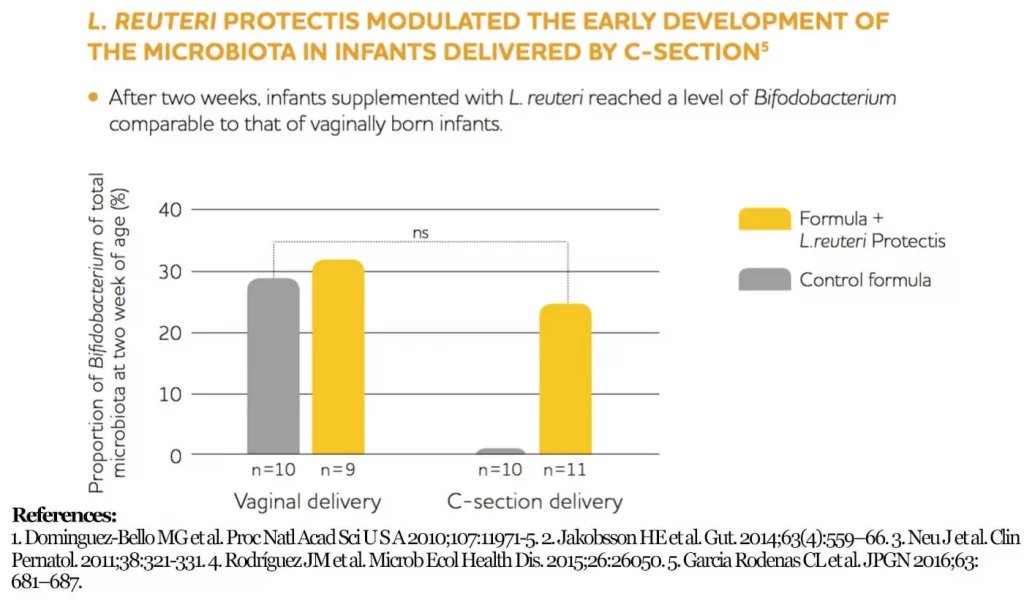
But new evidence suggests that probiotic bacteria could promote a fast recovery of the microbiota dysbiosis induced by C-section delivery.
A recent study showed that L. reuteri significantly increased the proportion of Bifidobacterium and Lactobacillus, and decreased Enterobacteriaceae in infants born by C-section, making their microbiota more similar to that of vaginally born infants.
Improves Infantile Colic
Research indicates infantile colic is a common condition, and as many as 26% of infants are diagnosed with the condition.
Immature or dysfunctional intestinal microbiota may lead to low-grade inflammation and abnormal intestinal metabolism, resulting in colic symptoms.
Clinical evidence suggests the causes of infantile colic are multifactorial and not fully understood, but gut dysmotility and visceral hyper-sensitivity are regarded as the main factors behind the condition.
Microbiota in Infants with Colic
Growing evidence in the literature has linked the gut microbiota to colic in infancy. Low levels of Lactobacillus and Bifidobacterium and high levels of coliform bacteria, in particular E. coli, have been observed in colicky infants compared to non-colicky ones.
Such imbalances could be a possible cause for abnormal gut motility and increased gas production, implicating dysbiosis as a key driver in infantile colic.
Reduced Fussing and Crying with BioGaia
L. reuteri is the only probiotic with expert recommendations for both treatment and prevention of infantile colic. Possible modes of action include an improvement of gut motility and a direct effect on visceral pain.
In addition, it has been shown that supplementation of L. reuteri in colicky babies, increased faecal Lactobacilli and decreased faecal E. coli. These changes in the microbiota may also be one of the explanations behind the clinical improvement of colicky babies.
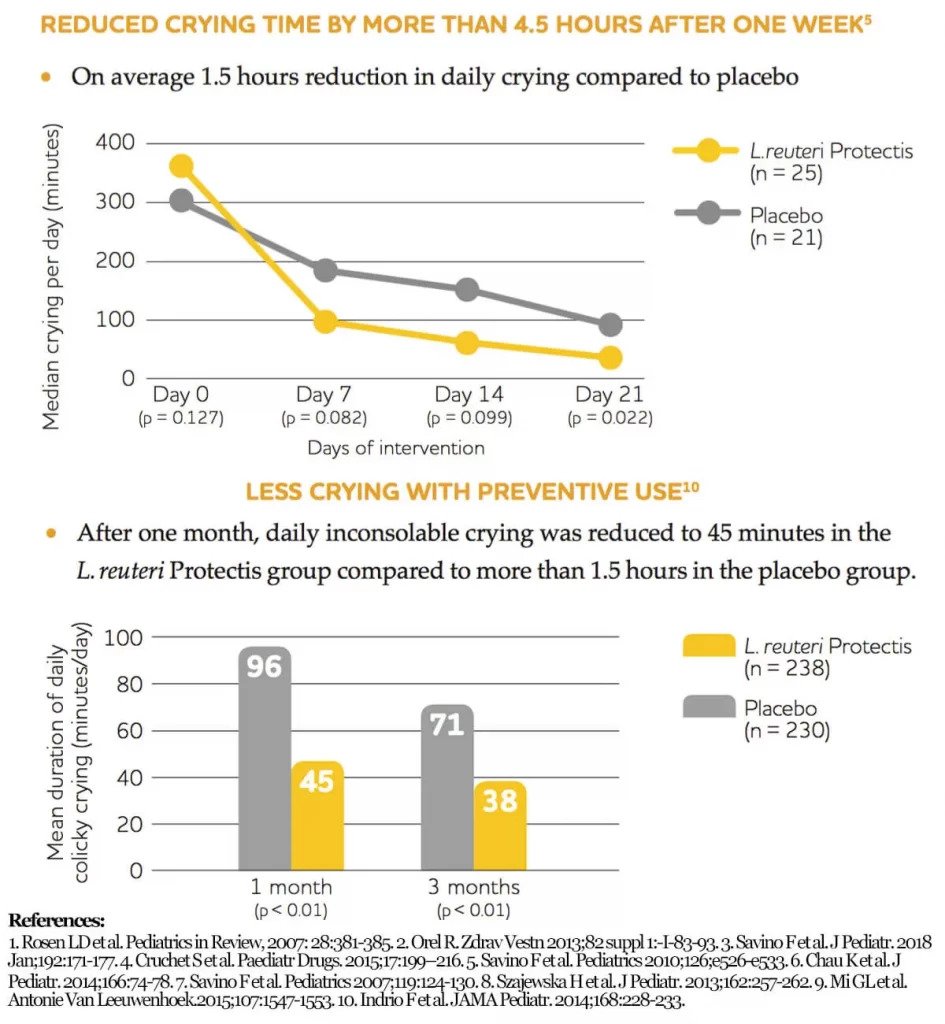
Several studies have shown that L. reuteri reduced crying and fussing compared with placebo in infants with colic. One study has also shown a preventive effect. Administration of L. reuteri to healthy newborns reduced the daily inconsolable crying by more than 50%.
FAQs
Are probiotics safe during pregnancy?
Yes. BioGaia’s L. reuteri DSM 17938 is one of the most extensively studied probiotic strains in the world. Over 290 clinical studies involving approximately 25,000 people — including pregnant women — have documented its safety and efficacy.
Read more in our Medical Research Papers on Pregnancy Health.
Which trimester should I start probiotics?
You can start at any stage of pregnancy, as each trimester offers different benefits to your health.
- 1st Trimester: Helps manage early bloating and digestive discomfort often linked to morning sickness.
- 2nd Trimester: Provides natural support for pregnancy-related constipation as your digestion slows.
- 3rd Trimester: Builds a healthy maternal microbiome to pass on to your baby during birth.
- Anytime: Essential for restoring gut balance if you are prescribed antibiotics.
Can probiotics prevent allergies in my baby?
Research suggests that a balanced maternal microbiome may reduce the risk of allergic conditions such as eczema and asthma in early childhood.
The key is in the transfer of beneficial bacteria from mother to baby during birth and breastfeeding, which helps shape your baby’s immune system from day one.
Will probiotics help if I’m having a C-section?
Yes. Clinical studies show that L. reuteri can help restore a more balanced microbiota in C-section babies, bringing it closer to that seen in vaginally born infants.
Can I take different probiotics at the same time?
Absolutely. BioGaia Probiotic Chewable Tablets and BioGaia Prodentis Lozenges 30’s are designed to support different areas — digestive and oral health — so taking both daily provides more comprehensive coverage during pregnancy.
How often should I take probiotics in a day?
Once a day is sufficient for each probiotic. Take one to two chewable tablets after a meal and one to two lozenges after brushing — at a time that fits your daily routine.
Can I continue taking probiotics while breastfeeding?
Absolutely. Continuing your probiotic routine after birth supports your own postnatal recovery and digestive health.
Studies show that a mother’s healthy microbiome can positively influence the quality of her breast milk, providing ongoing support for the baby’s developing immune system.
Are there any side effects?
While side effects are uncommon, some people may experience mild bloating or changes in bowel habits during the first few days as the gut adjusts. These symptoms are typically temporary and improve with continued daily use.
How easy are they to take when I’m on the go?
Since BioGaia pregnancy probiotics do not require refrigeration, you can easily keep them in your handbag, at work, or while travelling. Just keep them below 25°C and away from direct sunlight and heat.
Which baby probiotic is suitable for my baby?
Both BioGaia baby drops contain the same clinically researched L. reuteri strain to support your baby’s gut health from birth.
- BioGaia Probiotic Drops are ideal for daily digestive support, including relief for colic, regurgitation, and constipation.
- BioGaia Probiotic Drops with Vitamin D3 combine probiotics with added Vitamin D3 to support gut health, immune defence, and healthy bone development — especially beneficial for breastfed babies.
Start Building a Healthy Foundation in the First 1000 Days
BioGaia probiotics are here to support you every step of the way, from pregnancy to birth and beyond.