
Key takeaways:
- Probiotics are safe for newborns when using clinically tested strains designed for infants.
- L. reuteri DSM 17938 is one of the most researched probiotics for babies.
- Colic affects up to 1 in 5 babies, making digestive discomfort a common concern in early life.
- Probiotics may help reduce colic-related crying and support calmer, more comfortable feeding.
- They can also support digestion, helping to ease gas, bloating, and mild reflux.
- Daily use helps maintain a healthy balance of gut bacteria as your baby develops.
- BioGaia probiotic drops are suitable from day one and trusted by parents worldwide.
Introduction
As a new parent, every decision about your baby’s health matters. From feeding to sleep routines, it’s natural to question what is truly safe, especially when it comes to supplements like probiotics.
The good news is that certain probiotics have been carefully studied for use in infants, offering gentle support for your baby’s developing digestive system from the very beginning.
This guide explains what probiotics are, whether they are safe from day one, and how they may support your baby’s digestive comfort.
Probiotics for Newborns: What Parents Need to Know
Safety is often the first concern, and rightly so. Newborns have delicate, developing systems, so anything they consume must be gentle, safe, and well-researched.
Digestive discomfort is also very common in early life. In fact, as of 2026, colic affects around 1 in 5 babies worldwide, with some estimates as high as 40%, making it one of the most frequent concerns for new parents.
Probiotics are beneficial bacteria that help support the natural balance of your baby’s gut microbiome. This balance plays an important role in digestion, nutrient absorption, and overall comfort in the early stages of life.
From birth, a baby’s gut is still developing and adapting to feeding. Clinically studied probiotics can help support this process, working gently with your baby’s system to promote a more balanced and comfortable digestive environment.
Can I Give Probiotics to My Newborn?
Yes, probiotics can be given to newborns when they are clinically tested and specifically developed for infants.
Certain strains, such as L. reuteri DSM 17938, have been widely studied and are considered safe from day one. These probiotics are used globally and are often recommended by paediatricians for infant digestive support.
A newborn’s gut microbiome is still developing — and that’s completely normal. In fact, the first 1,000 days of life represent a critical window where the right foundations are being laid for lifelong immunity and digestive health.
During this period, the gut is rapidly colonising with bacteria that will shape how your baby processes nutrients and builds immune defences.
Supporting this process with the right probiotics can help nurture a healthy microbiome from the very start — giving your baby’s developing system the gentle boost it needs.
What is L. reuteri DSM 17938, And Why Is It Recommended for Babies?
Limosilactobacillus reuteri DSM 17938 is one of the most studied probiotics for infant gut health. Originally isolated from human breast milk, it is a naturally human-associated strain, making it especially compatible with the developing infant gut.
Research has shown that this strain can help support:
- Reduction in colic-related crying
- Gut comfort
- Digestive balance
Its strong clinical backing is what makes it a trusted choice for both parents and healthcare professionals.
Read more about baby and child gut health here!
Do Probiotics Help Newborns With Colic, Gas, or Reflux?
Digestive discomfort is common in newborns as their gut continues to develop. Symptoms like colic, gas, and reflux can be challenging for both babies and parents.
Probiotics work by supporting the natural balance of bacteria in the gut, which can help improve digestive comfort over time.
Can probiotics help with newborn colic?
Colic is often linked to digestive discomfort, especially as a newborn’s gut is still developing in the first few months. This can lead to prolonged crying, fussiness, and difficulty settling.
Probiotics, particularly L. reuteri DSM 17938, may help reduce crying time associated with colic by supporting a more balanced gut environment. A healthier gut microbiome can improve how your baby processes milk and reduce digestive discomfort over time.
It’s important to note that probiotics do not provide instant relief. Instead, they work gradually by supporting your baby’s digestive system from within. With daily use, many parents notice improvements in their baby’s comfort, feeding patterns, and overall calmness.
Read the full clinical study here: Lactobacillus reuteri DSM 17938 in Infantile Colic. A Randomised, Double-Blind, Placebo-Controlled Trial.
Do probiotics help with gas in babies?
Gas and bloating are common in newborns, especially as their digestive system is still developing and learning to process milk efficiently.
Probiotics may support gut motility and help maintain a more balanced digestive environment, which can contribute to reduced gas and bloating over time.
By encouraging a healthier balance of gut bacteria, they help the digestive system function more comfortably as your baby grows.
Some babies may pass more wind than usual when first starting probiotics. This is completely normal and usually settles within a week or two. It’s simply a sign that the good bacteria are getting to work in your baby’s gut.
With daily use, most parents find their baby’s digestion becomes more comfortable and settled over time.
Can probiotics help with newborn reflux?
Reflux is common in babies and is often linked to an immature digestive system that is still developing.
Research suggests that L. reuteri DSM 17938 can help reduce your baby’s spit-ups and help milk digest and clear from the stomach more quickly after feeds. With daily use, many parents notice less fussiness and discomfort associated with reflux over time.
It’s important to understand that probiotics do not treat reflux directly. Instead, they provide gentle, daily digestive support, which can contribute to improved comfort as your baby’s system matures.
Are There Any Side Effects of Probiotics for Infants?
For most babies, probiotics are well-tolerated and gentle.
Some babies may pass more wind than usual when first starting probiotics. This is completely normal and usually settles within a week or two — it’s simply a sign that the good bacteria are getting to work in your baby’s gut.
With daily use, most parents find their baby’s digestion becomes more comfortable and settled over time.
When using clinically tested strains, probiotics are considered safe for daily use, giving parents peace of mind.
How Do I Give Probiotics to My Baby?
Introducing probiotics into your baby’s routine is simple and does not require any complicated steps. BioGaia comes in two forms — drops and powder — and can be given in a few easy ways.
- Drops:
- Spoon feed: Place the 5 drops into a small silicone spoon and feed directly to your baby. Avoid dropping directly from the bottle into your baby’s mouth — contact with saliva can contaminate the bottle.
This method is safe, quick, and widely used.
- For breastfed babies: Drop directly onto the nipple just before feeding
- Powder:
- Mix into lukewarm breast milk or formula (below 35°C) before feeding. Avoid hot liquids, as heat can reduce the effectiveness of the live probiotic cultures
Best time to give baby probiotics
There is no fixed “best” time. Probiotics can be given at any time of the day. What matters most is consistency.
Choose a routine that fits naturally into your baby’s feeding schedule to make it easier to maintain.
If your baby tends to spit up frequently, you may want to try giving probiotics around 30 minutes before a feed, so they have time to settle before milk comes in.
Also read: Does Your Child Fall Sick Too Often? How Probiotics Can Help Build Stronger Immunity.
Probiotic Drops by BioGaia: Which One Should You Choose?
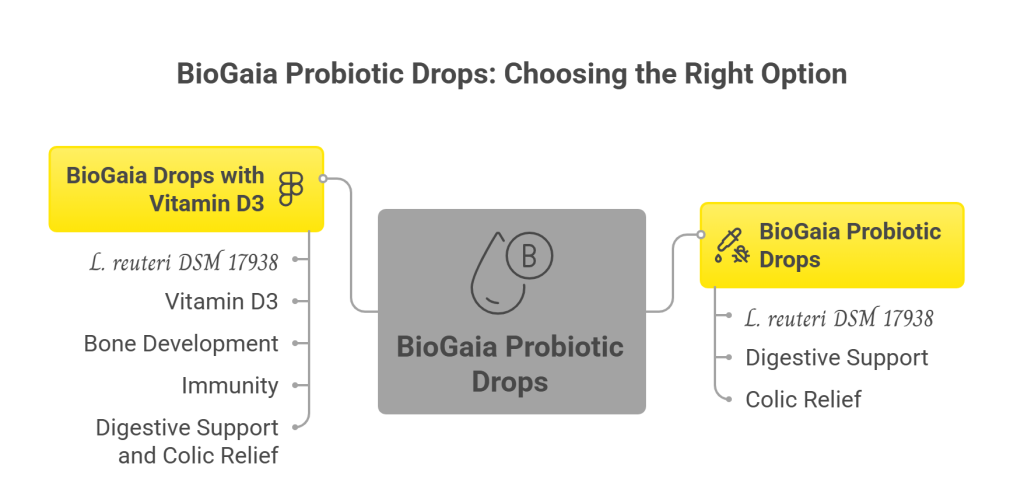
Image: BioGaia baby probiotics
BioGaia probiotic drops are designed for infants from day one, using a clinically studied strain to support digestive comfort and gut balance. They come in two simple options to suit your baby’s needs.
BioGaia Probiotic Drops contain the clinically studied L. reuteri DSM 17938 strain and are ideal for supporting digestion and colic relief.
BioGaia Drops with Vitamin D3 combines the same probiotic with added Vitamin D to support immunity and bone development, while also supporting digestion.
If your baby is fully breastfed, the Vitamin D3 version is the recommended choice as the breast milk alone does not provide sufficient Vitamin D, and health guidelines recommend 400 IU of Vitamin D daily for all breastfed infants from the first few days of life.
If your baby is formula-fed, they may already be getting sufficient Vitamin D through their formula — in which case the standard probiotic drops are a suitable choice.
FAQs About Probiotics for Newborns
Do paediatricians in Malaysia recommend probiotics for babies?
Many paediatricians recommend clinically-studied probiotics, especially for digestive concerns such as colic and discomfort.
At what age can babies start probiotics?
Certain probiotics, such as L. reuteri DSM 17938, are suitable from day one. Always choose products that are formulated for newborns and follow the recommended dosage.
Are probiotics safe for newborn babies?
Yes. Probiotics are generally safe for newborns when they are clinically tested and designed for infants. These strains are carefully studied to ensure they are gentle on a baby’s developing digestive system.
What is the best probiotic for newborns?
The best probiotics for newborns are those backed by clinical research in infants. L. reuteri DSM 17938 is one of the most studied strains, known for supporting digestion, gut balance, and reducing colic symptoms.
How long does it take for probiotics to work in babies?
Some parents may notice improvements, such as reduced crying or better digestion, within a few days. However, consistent daily use over 1–3 weeks usually provides more noticeable and stable results.
Should I give probiotics to my baby daily?
Yes, probiotics work best when given daily. Regular use helps maintain a healthy balance of good bacteria in your baby’s gut, supporting ongoing digestive comfort.
What are the signs my baby needs probiotics?
You don’t have to wait for problems to appear. Every baby can benefit from probiotic support from day one.
Probiotics like L. reuteri DSM 17938 are especially helpful if your baby experiences frequent crying or colic, excessive wind, reflux, or irregular bowel movements.
But even in healthy babies, starting early helps build a strong gut microbiome during the critical first 1,000 days — supporting better digestion, stronger immunity, and long-term health.
Can I mix probiotics with formula milk?
Yes, probiotic drops can be mixed with formula or breast milk. Just ensure the milk is not hot (<35°C), as high temperatures may reduce the effectiveness of the live probiotic cultures.
Final Thoughts: Supporting Your Baby’s Gut Health From Day One
Your baby’s health always comes first, and safety is key when choosing any supplement.
Clinically tested probiotics provide that reassurance, offering gentle support for your baby’s developing digestive system. With over 290 clinical trials, BioGaia’s probiotics are trusted by parents worldwide.
With the right probiotic, you can support your baby’s gut health from day one—helping them feel more comfortable, naturally.
Give your baby gentle, clinically tested digestive support from day one. Shop BioGaia Baby Probiotics, trusted by parents worldwide.