
Key Takeaways
- Bleeding gums are often an early sign of plaque-related gingival inflammation.
- Consistent brushing, interdental cleaning and professional dental care help control plaque and maintain healthy gums.
- Pregnancy, diabetes, tobacco use and certain medications may increase the likelihood or severity of gum problems.
- BioGaia Prodentis contains Limosilactobacillus reuteri DSM 17938 and ATCC PTA 5289, two clinically studied strains for oral and gum health.
- BioGaia Prodentis can be incorporated into a complete gum-care routine alongside effective daily cleaning and professional dental care.
- Persistent bleeding or symptoms such as gum recession, swelling, pus or loose teeth require dental assessment.
Bleeding gums are often an early sign of gum inflammation. One of the most common causes is plaque accumulating around the gumline, which can lead to gingivitis.
Because gingivitis may develop without significant pain, bleeding during brushing or interdental cleaning can be an important signal that your gums need attention. Pregnancy, diabetes, tobacco use and certain medications may also affect gum health.
Recognising the cause and taking early action can help restore healthier gums and prevent inflammation from progressing.
Why Are My Gums Bleeding?
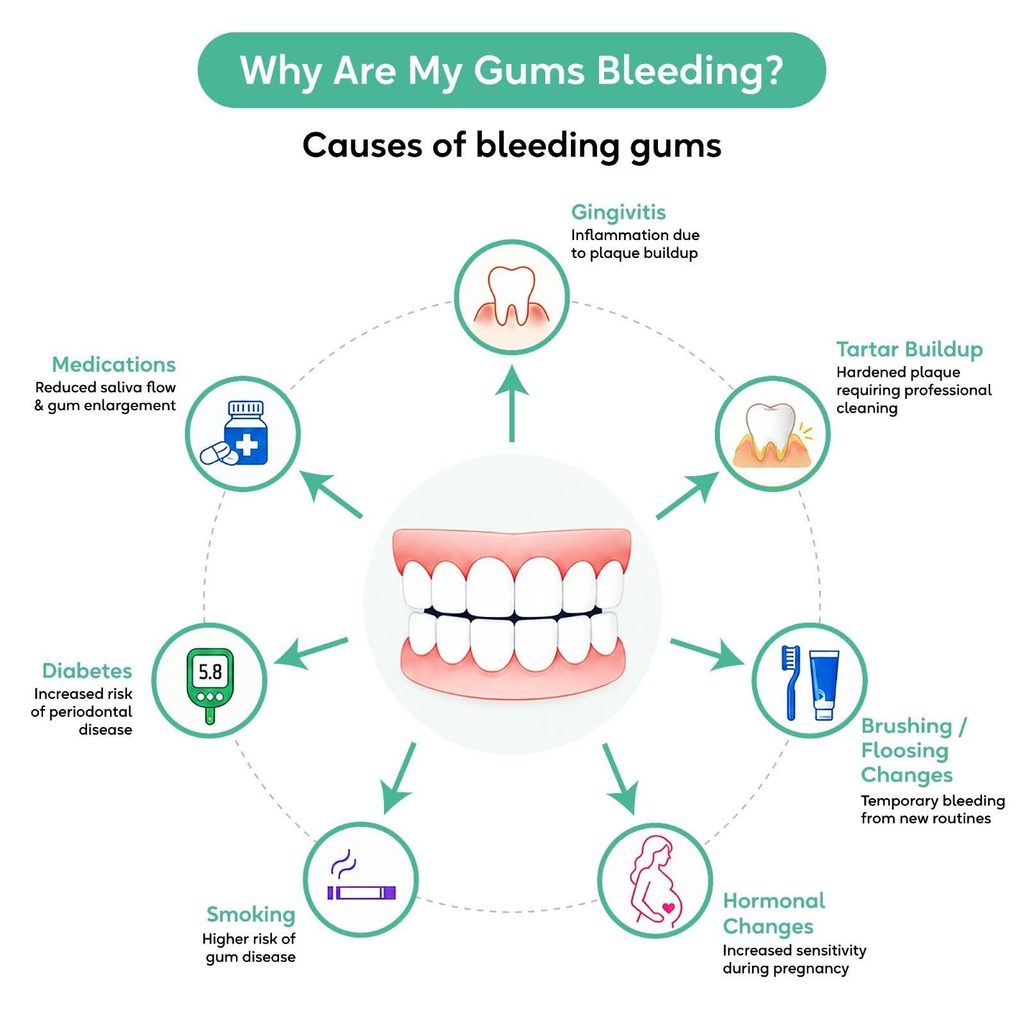
Bleeding gums can happen for several reasons, but one of the most common is inflammation caused by plaque buildup. If your gums bleed regularly, it is worth looking at both your oral-care habits and other factors that may be affecting gum health.
1. Gingivitis and Plaque Buildup
Plaque is a sticky layer of bacteria that constantly forms on your teeth and along the gumline. If it is not removed properly, it can irritate the gums and trigger inflammation.
This may lead to gingivitis, the early stage of gum disease. Common signs include:
- Red or swollen gums.
- Tenderness.
- Bleeding when brushing or flossing.
- Persistent bad breath.
Gingivitis may not always be painful, so bleeding can be one of the first signs that your gums
need attention.
2. Tartar Buildup
When plaque is not removed, it can harden into tartar, also known as calculus. Unlike soft plaque, tartar cannot be removed effectively with normal brushing or flossing.
Tartar can make it easier for more plaque to collect around the gumline, which may contribute to ongoing irritation and inflammation. Professional dental cleaning is usually needed to remove it.
3. Brushing and Interdental-Cleaning Technique
Gums may bleed when you resume flossing or interdental cleaning after a long break, but this often reflects existing gingival inflammation rather than the cleaning itself.
Using excessive force or an incorrect technique can also injure the gum tissue. Clean gently and consistently with a soft-bristled toothbrush and an appropriate interdental cleaning tool. If bleeding continues despite regular, gentle cleaning, arrange a dental assessment.
4. Hormonal Changes, Including Pregnancy
Hormonal changes during pregnancy can intensify the gums’ response to plaque, making them more susceptible to redness, swelling and bleeding. This is commonly known as pregnancy gingivitis. Consistent plaque control, regular dental care and targeted oral-microbiome support become particularly important during pregnancy.
For more information, read Pregnancy Gingivitis: Why Your Gums Bleed and How BioGaia Prodentis Supports Gum Health.
5. Smoking or Tobacco Use
Smoking and other forms of tobacco use increase the risk of periodontal disease and can damage the tissues supporting the teeth.
Smoking may also reduce visible gum bleeding by affecting blood flow to the gum tissue. This means periodontal inflammation can be present even when bleeding is not obvious. Regular dental assessments are therefore especially important for people who smoke or use tobacco.
6. Diabetes and Other Health Factors
Diabetes and periodontal disease have a recognised bidirectional relationship. Poorly controlled blood glucose can increase the risk and severity of periodontitis, while periodontal inflammation may make blood glucose more difficult to manage.
Stress, certain illnesses and genetic susceptibility may also influence a person’s risk of developing or experiencing progression of periodontal disease.
Bleeding gums do not necessarily indicate an underlying medical condition. However, frequent, unexplained or persistent bleeding should be assessed by a dentist.
7. Certain Medications and Dry Mouth
Certain medications can affect gum health in different ways. Anticoagulants and antiplatelet medicines may make bleeding more noticeable, while some medications can reduce saliva flow or cause the gums to enlarge.
Dry mouth may allow plaque to accumulate more easily, while enlarged gum tissue can make effective cleaning around the teeth more difficult.
If gum bleeding begins or worsens after starting a medication, speak with your dentist or healthcare professional. Do not stop prescribed medication without medical advice.
Take Action When Your Gums Bleed
If your gums bleed, focus first on consistent and gentle plaque removal:
- Brush twice daily with fluoride toothpaste
- Clean between your teeth every day
- Pay particular attention to the gumline
- Use a soft-bristled toothbrush
- Avoid aggressive brushing
- Maintain regular dental check-ups and professional cleaning
Do not stop brushing or interdental cleaning simply because your gums bleed. Gentle, consistent cleaning can help control the plaque-related inflammation contributing to the bleeding.
If plaque has hardened into tartar, professional cleaning will be needed because brushing and flossing cannot remove it effectively.
Support Gum Health with BioGaia Prodentis
A complete gum-care routine combines effective daily cleaning, professional dental care and support for a balanced oral microbiome.
BioGaia Prodentis contains two clinically studied probiotic strains:
- Limosilactobacillus reuteri DSM 17938
- Limosilactobacillus reuteri ATCC PTA 5289
These specific strains have been researched for their role in supporting gingival and periodontal health. While brushing and interdental cleaning mechanically remove plaque, BioGaia Prodentis provides targeted support for the oral microbiome and the environment around the gums.
What Does Research Say About L. reuteri and Gingivitis?
Clinical research provides some evidence that specific L. reuteri strains may help support gum health.
A randomised controlled trial involving 72 adults evaluated lozenges containing the same two L. reuteri strains found in BioGaia Prodentis. After 42 days, the probiotic group showed significant improvements in the assessed gingival and periodontal parameters compared with placebo.
Another double-blind, placebo-controlled study involving 42 adults with moderate gingival inflammation found improvements in bleeding on probing among participants receiving L. reuteri, together with changes in some inflammatory markers.
Overall, oral probiotics may offer additional support for gingivitis and bleeding gums, but they work best alongside effective plaque removal and appropriate dental care.
When Should Bleeding Gums Be Checked by a Dentist?
Occasional bleeding may improve with better plaque control, but frequent or persistent bleeding should be checked by a dentist. This is especially important if the bleeding happens alongside other signs of gum disease.
Make a dental appointment if you notice:
- Gums that bleed regularly when brushing or flossing.
- Persistent redness, swelling, or tenderness.
- Gum recession.
- Ongoing bad breath.
- Pus around the gumline.
- Loose teeth.
- Pain or discomfort when chewing.
- Bleeding that continues despite consistent oral hygiene.
A dentist can determine whether the cause is gingivitis, periodontitis, tartar buildup, or another oral health issue.
FAQ
Bleeding may improve when the underlying irritation is addressed, especially if plaque-related gingivitis is involved. Consistent brushing, interdental cleaning, and professional care where needed can help improve gum health. If bleeding continues, a dentist should check for another cause.
Occasional bleeding can happen, but it should not be considered normal if it keeps recurring. Frequent bleeding may indicate gum inflammation or another oral health issue that needs attention.
Stress may affect oral health indirectly by influencing immune responses, oral-care habits, and susceptibility to gum problems. It is unlikely to be the only cause, so persistent bleeding should still be assessed properly.
Dry mouth can make the oral environment less protective because saliva helps support natural cleansing and microbial balance. This may make plaque buildup and gum irritation more likely, especially if oral hygiene is also affected.
They can occur together. Gingivitis and other gum problems may be associated with both bleeding and persistent bad breath because plaque and bacterial activity can affect the gums and oral environment.
Not always. Bleeding gums are more commonly associated with gingivitis, but they can also occur in more advanced periodontal disease. Signs such as gum recession, loose teeth, or changes in the bite may suggest that the problem has progressed.
Usually, no. Stopping interdental cleaning may allow more plaque to build up. Use a gentle technique and continue cleaning consistently, unless your dentist advises otherwise. If bleeding persists, arrange a dental assessment.
Conclusion
Bleeding gums are often an early sign of plaque-related inflammation. Consistent brushing, interdental cleaning and professional dental care can help control plaque and restore healthier gums.
A complete gum-care routine can also include BioGaia Prodentis, which contains Limosilactobacillus reuteri DSM 17938 and ATCC PTA 5289—two clinically studied probiotic strains for oral and gum health. Used alongside effective daily cleaning and regular dental care, BioGaia Prodentis provides targeted support for the oral microbiome and healthy gums.
If bleeding persists or occurs together with swelling, gum recession, pus, ongoing bad breath or loose teeth, arrange a dental assessment.