
Key Takeaways
- Pregnancy gingivitis is gum inflammation that occurs when hormonal changes during pregnancy heighten the gums’ response to plaque, increasing the likelihood of redness, swelling and bleeding.
- Consistent brushing, interdental cleaning and professional dental care help control pregnancy gingivitis.
- Dental check-ups and necessary dental treatment are generally safe throughout pregnancy.
- BioGaia Prodentis contains Limosilactobacillus reuteri DSM 17938 and Limosilactobacillus reuteri ATCC PTA 5289.
- In a clinical study involving pregnant women with gingivitis, these two strains significantly improved Gingival Index and Plaque Index scores compared with placebo.
- BioGaia Prodentis can be incorporated into a complete daily gum-care routine during pregnancy.
Pregnancy can make your gums more susceptible to bleeding, swelling and sensitivity. These changes are often signs of pregnancy gingivitis, a common oral-health concern caused by an increased inflammatory response to plaque during pregnancy.
The good news is that pregnancy gingivitis can be managed. Consistent plaque control, professional dental care and targeted oral-microbiome support with BioGaia Prodentis can all form part of a complete pregnancy gum-care routine.
This article explains why pregnancy gingivitis develops, how to recognise it and the practical steps you can take to maintain healthy gums throughout pregnancy.
What Is Pregnancy Gingivitis?
Pregnancy gingivitis is inflammation of the gums that develops or becomes more noticeable during pregnancy. Hormonal changes can intensify the gums’ response to plaque bacteria, making them more likely to become red, swollen, sensitive or prone to bleeding.
Pregnancy gingivitis is limited to the gums. It differs from periodontitis, a more advanced form of gum disease that can damage the tissues and bone supporting the teeth.
Recognising and managing gingivitis early can help prevent the inflammation from progressing.
Why Are Your Gums More Sensitive During Pregnancy?
During pregnancy, rising levels of hormones such as oestrogen and progesterone can affect the gum tissue and intensify the body’s inflammatory response to plaque bacteria.
Plaque remains the main trigger. When this bacterial biofilm accumulates around the gumline, pregnancy-related changes can make the gums respond more strongly, resulting in redness, swelling, tenderness and bleeding.
This is why consistent brushing and interdental cleaning become especially important during pregnancy—even if your gums were healthy before pregnancy.
What Are the Symptoms of Pregnancy Gingivitis?
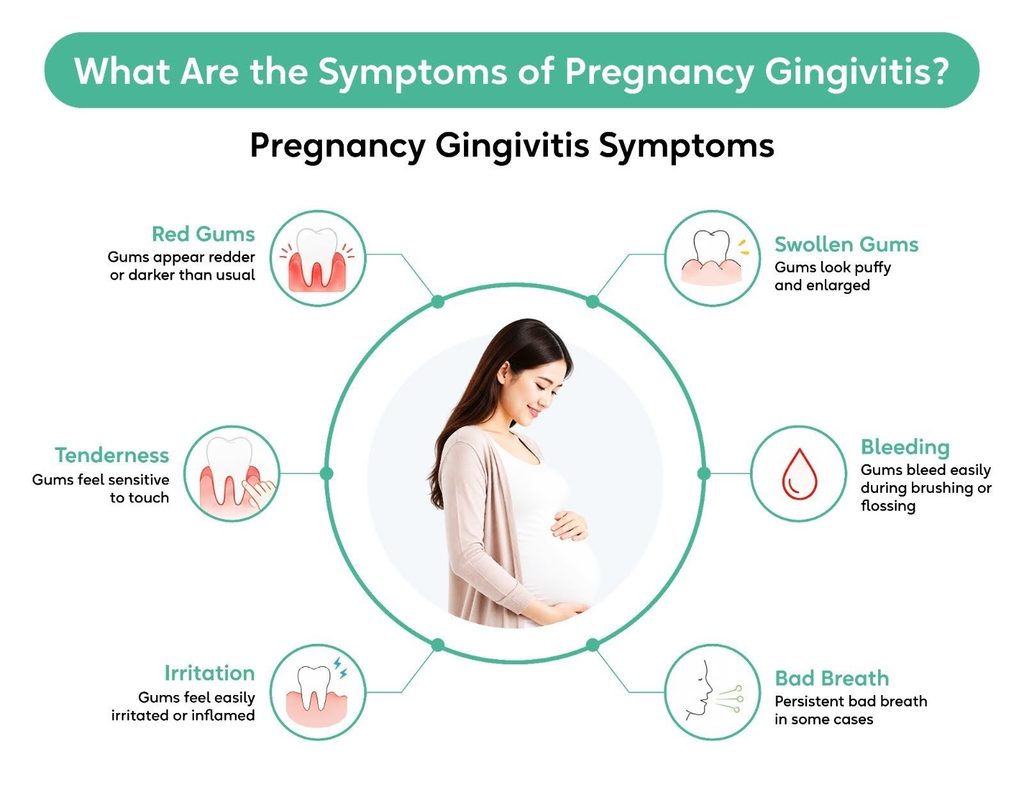
Pregnancy gingivitis can range from mild irritation to more noticeable gum inflammation. In many cases, the first sign is bleeding when brushing or flossing, even if the gums do not feel painful.
Common symptoms include:
- Red or darker-looking gums.
- Swollen or puffy gums.
- Tenderness or sensitivity.
- Bleeding during brushing or flossing.
- Gums that feel more easily irritated.
- Persistent bad breath in some cases.
These symptoms are often more noticeable around areas where plaque builds up along the gumline.
While pregnancy gingivitis swollen gums and bleeding are common signs, ongoing symptoms should not be ignored. If you also notice gum recession, pus, loose teeth, or significant pain, it is important to speak with a dentist to rule out a more advanced gum problem.
Is Gingivitis Common in Pregnancy?
Yes. Hormonal changes can make the gums respond more strongly to plaque, increasing the likelihood of gingival inflammation during pregnancy.
A 2022 systematic review and meta-analysis found that periodontal problems and signs of gum inflammation, including bleeding on probing, were common among pregnant women. The reported prevalence varied considerably between studies and populations.
Although pregnancy gingivitis is common, it does not need to be accepted as unavoidable. Consistent daily cleaning and regular dental care can help keep inflammation under control.
When Does Pregnancy Gingivitis Develop?
Pregnancy gingivitis may begin during the first trimester and become more noticeable as pregnancy progresses. Symptoms often improve after delivery as hormone levels return towards their pre-pregnancy state.
However, plaque and tartar do not disappear after pregnancy. Managing inflammation throughout pregnancy helps protect the gums and prevents gingivitis from becoming more difficult to control.
Take Control of Pregnancy Gingivitis
Managing pregnancy gingivitis begins with effective plaque control. Brush twice daily with fluoride toothpaste and clean between your teeth every day using floss or interdental brushes.
If your gums bleed:
- Continue brushing and interdental cleaning
- Use a soft-bristled toothbrush
- Clean gently along the gumline
- Avoid aggressive brushing
- Maintain a consistent routine
Bleeding is a sign of inflammation—not a reason to stop cleaning the area.
Continue Professional Dental Care During Pregnancy
Preventive, diagnostic and restorative dental treatment is considered safe throughout pregnancy, according to the American Dental Association. Professional cleaning can also remove tartar that cannot be removed through brushing or flossing.
In a large randomised controlled trial involving more than 800 pregnant women, nonsurgical periodontal treatment improved periodontal health and was considered safe during pregnancy, although it did not reduce the rate of preterm birth.
Support Pregnancy Gum Health with BioGaia Prodentis
BioGaia Prodentis can be incorporated into a complete pregnancy gum-care routine to support the oral microbiome and gum health.
It contains two clinically studied probiotic strains:
- Limosilactobacillus reuteri DSM 17938
- Limosilactobacillus reuteri ATCC PTA 5289
These specific strains have been clinically studied in pregnant women with gingivitis. Unlike brushing and interdental cleaning, which mechanically remove plaque, BioGaia Prodentis provides targeted support for the oral microbiome and the environment around the gums.
What Does the Research Show?
A randomised, double-blind, placebo-controlled trial studied 45 pregnant women with gingivitis. Participants received either placebo lozenges or lozenges containing L. reuteri DSM 17938 and ATCC PTA 5289 twice daily for about seven weeks.
At the end of the study, women who received the probiotic lozenges had significantly lower Gingival Index and Plaque Index scores than those who received placebo. The researchers concluded that this strain combination may be a useful adjunct in controlling pregnancy gingivitis.
BioGaia Prodentis contains the same combination of clinically studied strains, making it a relevant addition to daily brushing, interdental cleaning and professional dental care during pregnancy.
Build a Complete Pregnancy Gum-Care Routine
To maintain healthy gums throughout pregnancy:
- Brush twice daily with fluoride toothpaste
- Clean between your teeth every day
- Use a soft-bristled toothbrush if your gums are sensitive
- Pay particular attention to the gumline
- Attend regular dental check-ups and professional cleaning
- Limit frequent sugary snacks
- Incorporate BioGaia Prodentis as directed for targeted oral-microbiome support
If your gums bleed, continue cleaning them gently. Combining effective plaque control, professional dental care and BioGaia Prodentis provides a complete approach to supporting gum health during pregnancy.
FAQ
Pregnancy gingivitis is common, but that does not mean it should be ignored. Hormonal changes can make the gums more sensitive to plaque, increasing the likelihood of redness, swelling, tenderness, and bleeding. Good oral hygiene and regular dental care can help keep symptoms under control.
Pregnancy gingivitis may improve after delivery as hormone levels return towards their pre-pregnancy state. However, plaque and tartar do not disappear on their own. If inflammation continues after birth, a dental check-up is important to identify and treat the cause.
Pregnancy gingivitis itself should not be assumed to directly harm the baby. Research has explored links between more advanced periodontal disease and pregnancy outcomes, but an association does not necessarily mean one causes the other. The best approach is to keep gum inflammation under control with good oral care and professional support.
Yes. Routine preventive dental care and professional cleaning are generally considered safe during pregnancy. If tartar has built up or your gums remain inflamed, a dentist or dental hygienist can recommend appropriate care rather than delaying treatment unnecessarily.
Usually, no. Stopping interdental cleaning can allow more plaque to collect between the teeth and along the gumline. Floss gently and consistently, and speak with a dentist if bleeding is frequent, heavy, or does not improve.
Gingivitis affects the gums, while periodontitis is a more advanced form of gum disease that can damage the tissues and bone supporting the teeth. Ongoing gum inflammation should therefore be managed early, especially if you notice recession, loose teeth, or worsening symptoms.
Certain oral probiotic strains can provide additional support for gum health during pregnancy. Research on L. reuteri DSM 17938 and ATCC PTA 5289 suggests they may help support gingival health during pregnancy when used as an adjunct to good oral hygiene.
Conclusion
Hormonal changes during pregnancy can make your gums more sensitive to plaque, increasing the likelihood of bleeding, swelling and tenderness. Consistent brushing, interdental cleaning and regular dental care help keep plaque and gum inflammation under control.
A complete pregnancy gum-care routine can also include BioGaia Prodentis, which contains two clinically studied probiotic strains:
- Limosilactobacillus reuteri DSM 17938
- Limosilactobacillus reuteri ATCC PTA 5289
In a clinical study involving pregnant women with gingivitis, this specific strain combination significantly improved Gingival Index and Plaque Index scores compared with placebo. Used alongside daily oral hygiene and professional dental care, BioGaia Prodentis provides targeted support for the oral microbiome and healthy gums throughout pregnancy.
For more on oral care and probiotics, read
- 7 Ways Probiotics can Improve your Oral Health
- Your Gums Are Bleeding: Here’s What They May Be Telling You
- Can Gum Health Affect the Rest of Your Body? Understanding the Oral–Systemic Connection