
Infection Protection for Adults and Children
A Flexible Solution For A Healthier Life
BioGaia chewable tablet makes it easier
to give and take probiotics
Why Gut Health Matters for Your Immune System
Microorganism, a prerequisite for life
Earlier it has been widely cited in literature that humans carry 10 times as many bacteria cells as body cells. However, new findings suggest that the number of bacterial cells are actually the same as the number of human cells. These bacteria are called the human microbiota and they are extremely essential for human health. The microbiota consists of some 100 trillion bacteria and is often referred to as an organ of its own right.
Microorganisms “educate” the immune system, help digest our food by breaking down its content of dietary fiber and produce certain vitamins. Microorganisms are also an important part of the body’s first line of defense against foreign and pathogenic microorganisms. Both the number of microorganisms and their diversity are vital for maintaining the balance in the body.
A Healthy Gut Is A Healthy Life
Most of the immune system is located in the gut which makes a healthy intestinal mucosa and a balanced microbiota essential for a well functioning immune system. A healthy microbiota can reduce the risk of infections and the need for antibiotics.


Your Lifestyle Affects Your Immune Health
Modern life can make it harder to maintain a strong immune system. Too little exercise, an unhealthy diet, high stress levels, poor sleep, and seasonal changes can all affect the body’s natural defences and increase the risk of infections.
Stress, Poor Sleep and Diet Can Increase Infection Risk
For many adults, balancing work, sleep, home, and family is not easy. Over time, a hectic lifestyle can affect gut health and overall wellbeing, making the body more vulnerable to common infections.
Because most of the immune system is located in the gut, maintaining a healthy gut microbiota is an important part of supporting everyday immune health.
How L. reuteri Supports Everyday Immunity
BioGaia’s probiotic strain L. reuteri helps support gut health by restoring a natural balance in the gastrointestinal tract. It also competes with harmful bacteria for adhesion receptors, helping prevent pathogens from multiplying in the gut.
Clinical research has shown that L. reuteri can help strengthen the immune system and significantly reduce the frequency of sick days [2] , making it a helpful daily probiotic for adults with busy lifestyles.
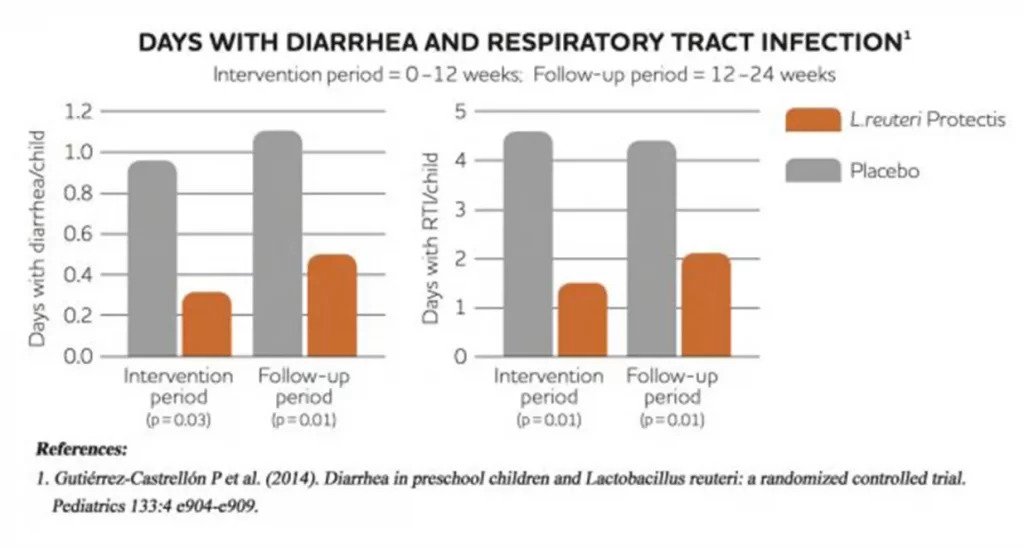
In healthy children attending day care centers, research shows that daily administration of L. reuteri (L. reuteri DSM 17938) reduced the number of days with diarrhea and respiratory tract infection by 67% [1].
Healthy Ageing and Infection Protection
As we age, our bodies naturally undergo changes that can affect overall health and wellbeing, including the way the immune system responds to everyday challenges. At the same time, the balance of beneficial bacteria in the gut may also change, making gut health an important part of maintaining the body’s natural defences.
Supporting a healthy gut microbiome through good nutrition, an active lifestyle, and clinically studied probiotics may help maintain gut balance and support everyday immune health as part of a healthy ageing journey.

Probiotics During and After Antibiotics
Antibiotics are effective at treating bacterial infections, but they can also reduce the number of beneficial bacteria in the gut. As a result, around 25% of patients experience antibiotic-associated diarrhoea (AAD), a common side effect of antibiotic treatment. The risk of AAD is increased by factors such as the intake of several different types of antibiotics over a long period of time, gastrointestinal surgery and long-term hospital stays.
Taking probiotics during and after a course of antibiotics may help restore the natural balance of good bacteria in the gut. By supporting a healthy gut microbiome, probiotics can help maintain digestive health while your body recovers from antibiotic treatment.


Constipation and Probiotics
Constipation is a common digestive problem that affects both children and adults. The incidence of constipation among children ranges from 7% to 30%, depending on the country, and many continue to experience symptoms into their teenage and adult years.
As a result, functional constipation remains a common condition in adulthood, affecting an estimated 14% of the global population, with a higher prevalence among women and older adults.
Functional constipation occurs when there is no underlying medical condition responsible for the symptoms. As the gut microbiota plays an important role in digestive health, maintaining a healthy balance of beneficial bacteria with probiotics may help support normal bowel function and overall gut health.
Understanding Helicobacter pylori (H. pylori): The Gastric Ulcer Bacterium
At least half of the world’s population is infected with Helicobacter pylori (H. pylori), although the incidence varies significantly around the world. Infection rates exceed 80% of adults in developing regions such as Asia and Latin America, compared with 20% to 50% in industrialised countries. While many people experience no symptoms, H. pylori can damage the stomach lining and is associated with conditions such as gastritis and peptic ulcers.
Treatment typically involves a combination of antibiotics and acid-suppressing medication to eradicate the infection. However, antibiotic therapy may also disrupt the natural balance of beneficial bacteria in the gut. Supporting the gut microbiota with probiotics may help maintain digestive health and support a healthy balance of beneficial bacteria during and after treatment.
Why Choose BioGaia Probiotics for Infection Protection?
BioGaia combines decades of probiotic research with clinically studied strains to support gut health and overall wellbeing. Here’s why millions of people around the world trust BioGaia:
- More than 30 years of probiotic research and scientific innovation.
- Clinically studied L. reuteri strains researched for digestive health, immune support, and overall wellbeing.
- Human-adapted probiotic strains that naturally occur in the human body.
- Suitable for every stage of life, from infants and children to adults and older individuals.
- Convenient probiotic solutions available in drops, chewable tablets, powders, and lozenges to suit different needs and lifestyles.
FAQ
A healthy gut microbiome plays an important role in supporting the body’s natural immune defences. Clinically studied probiotics help maintain the balance of beneficial bacteria in the gut, which supports normal immune function.
Yes. Continuing probiotics after completing a course of antibiotics may help restore the natural balance of beneficial bacteria in the gut and support digestive recovery.
The duration may vary depending on your individual needs and your healthcare professional’s advice. Many people continue taking probiotics for several weeks after finishing antibiotics to help support gut balance.
Yes. Long-term stress may influence the balance of bacteria in the gut, which can affect digestion and the body’s natural immune response. Managing stress alongside a healthy lifestyle can help support overall gut health.
Yes. Daily probiotic supplementation helps maintain a healthy balance of beneficial bacteria in the gut, providing ongoing support for digestive and immune health.
Yes. Probiotics can be a convenient way for older adults to support gut health as part of a balanced diet and healthy lifestyle. Choosing clinically studied probiotic strains is recommended.
Some probiotic strains are suitable for both children and adults, while others are developed for specific age groups or health needs. Always follow the product’s recommended age guidelines.
Probiotics may help support the balance of beneficial bacteria in the gut during and after antibiotic treatment, helping to maintain digestive health while undergoing H. pylori therapy.
Digestive health refers to how well your digestive system functions, while gut health focuses on the balance of beneficial bacteria in your gut microbiome. The two are closely connected and both contribute to overall wellbeing.
Different probiotic strains provide different benefits. Choosing a clinically studied probiotic means selecting a strain that has been researched for a specific health purpose, such as digestive or immune support.