

What Is Colic?
Colic is characterised by frequent, prolonged episodes of crying or fussiness in a healthy baby. These episodes often occur in the late afternoon or evening and can be difficult to soothe.
When Does Colic Usually Start?
Colic typically begins within the first few weeks after birth and is most common during the first three months of life. Every baby is different, so the timing and severity of symptoms may vary.
Signs and Symptoms of Colic
Although every baby is different, colic often follows a recognisable pattern. Common signs and symptoms include:
- Prolonged crying: Crying for long periods, often without an obvious cause, despite being fed, changed, and comforted.
- Crying at the same time each day: Episodes commonly occur in the late afternoon or evening and may happen around the same time each day.
- Clenched fists and a tense body: Babies with colic may clench their fists, stiffen their arms or legs, or arch their back while crying.
- Pulling legs towards the tummy: Some babies draw their legs up towards their abdomen, which may suggest abdominal discomfort.
- Red face while crying: A baby’s face may become flushed or red during intense crying episodes.
- Difficulty settling: Even after feeding, changing, or cuddling, babies with colic may remain difficult to soothe until the episode passes.
If your baby’s crying is accompanied by fever, poor feeding, vomiting, blood in the stool, or other unusual symptoms, seek medical advice promptly, as these may indicate a condition other than colic.
Causes of Colic in Babies
The exact cause of colic is not fully understood. However, researchers believe that several factors may contribute to the development of colic in some babies, including:
- An immature digestive system: A baby’s digestive system is still developing during the first few months of life, which may contribute to digestive discomfort.
- Changes in the gut microbiota: Differences in the balance of microorganisms in the gut have been observed in some babies with colic.
- Swallowing excess air during feeding: Babies who swallow more air while feeding or crying may experience increased gas and abdominal discomfort.
- An immature nervous system: Some babies may be more sensitive to normal sights, sounds, and sensations as their nervous system continues to develop.
- Food sensitivities: In some cases, babies may be sensitive to certain proteins, such as cow’s milk protein, although this is not a cause of colic for most infants.
Whilst there may be several causes, the role of gut microbiota has come into focus recently.
Colicky infants have been seen to have lower numbers of certain types of healthy bacteria (Lactobacilli) in their digestive system compared to healthy infants.


Differences in microbiota composition in colicky and non colicky infants.
Lower counts of intestinal lactobacilli species in colicky infants compared to non-colicky ones.
Higher counts of coliforms, especially E. coli, in colicky infants compared to non-colicky ones.
Colic can also be attributed to other factors like underdeveloped gut movement which can lead to gassiness and pain.

Dr. Flavia Indrio
Department of Paediatrics
University of Barvi, Italy
“Colic, regurgitation and constipation can be prevented through early intervention with BioGaia L. reuteri DSM 17938”

Dr. Flavia Indrio recommend microbial transfer from mom to newborns for at least 1000 days from conception to 2 years after birth for the life-long health of the child.


How to Soothe a Baby with Colic?
First try to keep your spirit up and stay calm though it may be hard. Remember, there is nothing you have done wrong that has caused the colic. And usually it will gradually gets better within 3 to 4 months.
Although colic can be challenging, there are several ways to help comfort your baby during crying episodes. Every baby is different, so it may take time to find what works best.
- Hold and comfort your baby: Gentle cuddling, skin-to-skin contact, or carrying your baby may help them feel calm and secure.
- Try gentle rocking or soothing sounds: Rocking, swaying, white noise, or soft lullabies may help settle some babies.
- Burp your baby after feeds: Burping during and after feeding may help reduce swallowed air and improve your baby’s comfort.
- Check your feeding technique: If bottle-feeding, ensure the teat flow is appropriate and minimise air intake during feeds.
- Create a calm environment: Reducing noise, bright lights, and other stimulation may help soothe an overstimulated baby.
- Consider a clinically studied probiotic: Limosilactobacillus reuteri DSM 17938 is the most extensively studied probiotic strains in infant colic. As probiotic benefits are strain-specific, choose a product that clearly identifies this specific strain.
Helping Support Babies With Colic Using Using BioGaia Probiotics Drops
FGIDs during the first year of life
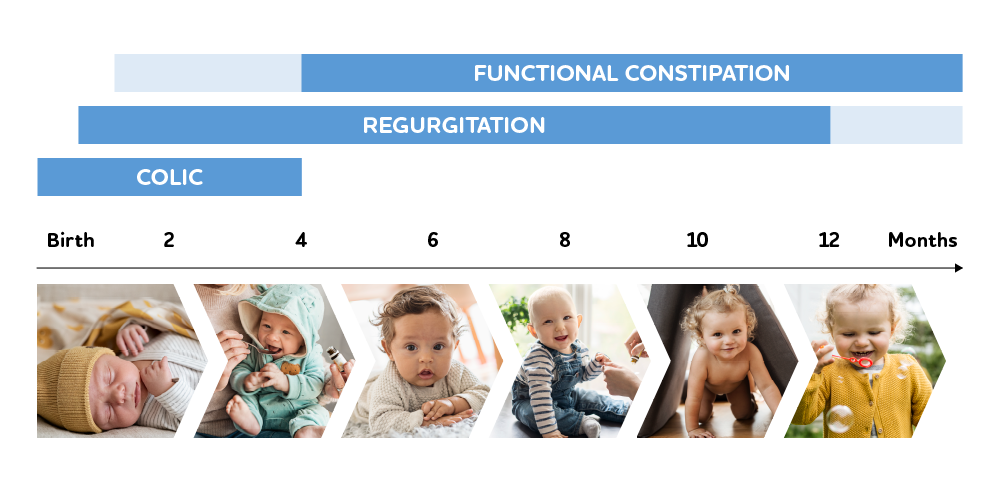
Research shows that BioGaia’s powerful patented strain Limosilactobacillus reuteri DSM 17938 is safe for babies and is found naturally in the intestinal tracks of babies and in some breast milk. It has significant effects on Functional Gastro Intestinal Disorders (FGIDs) and protection of infection in infants and children.
It reduces visceral pain by releasing of neuromodulating molecules. It also influences the intestinal microbiota by releasing reuterin, lactic acid and acetic acid, which help to promote growth of other good bacteria, and inhibit the bad bacteria thus restoring gut health.


Other health benefits from a healthy gut is the reduction of ‘leaky gut’ and increase intestinal cell growth, faster replacement of wounded intestinal cell thus resulting in improved immunity.
There are studies to link colic with inflammation. Left untreated colic can lead to other functional gastro intestinal disorder like Gerd (gastroesophageal reflux disease), CMP allergy (eg. cow milk allergy), aerophagia (excessive air swallowing), gut microflora imbalance, inadequate gut hormone secretion especially in the first twelve months of life and other neurological disorder (like migraine), psychological disorders, developmental delays later in life.



95% infants response to treatment.
50% reduction in crying time after one week.
How do I use
BioGaia Probiotic Drops?


Ingredients:
Active ingredient
Lactobacillus reuteri DSM 17938

Recommended dose:
5 drops, once daily
100 million CFU per
0.17ml (5 drops)

Storage condition:
Store at room temperature ~25°C
Once opened to refrigerate and use within 3 months.
Note:
Always read the label. Follow directions for use. If symptoms persist or worsen, talk to your health professional.


Original BioGaia Drops now also available in Powder formula!


It’s easy to add to meal!
Protectis Powder methods of preparation
For infants, toddlers
• Pour powder to milk bottle (low level milk)
• Mix and stir with drink (30 – 35˚C)
• Stir in a bowl (like porridge/rice etc)
• Pour directly into mouth
• Add to liquid drink/juice (below 35˚C)






BioGaia is available in chewable tablets for pregnant and lactating moms.
Also suitable for 3 years old and above and other adults.
*Pregnant moms can start on L. reuteri DSM 17938 soonest as new studies suggest that the placenta would already have its own microbiome.
*Recent studies point to taking a good probiotic can help lower risk of preterm birth and preeclampsia condition.